Classic Botanical Ornament Collection: Graphics for Crafts
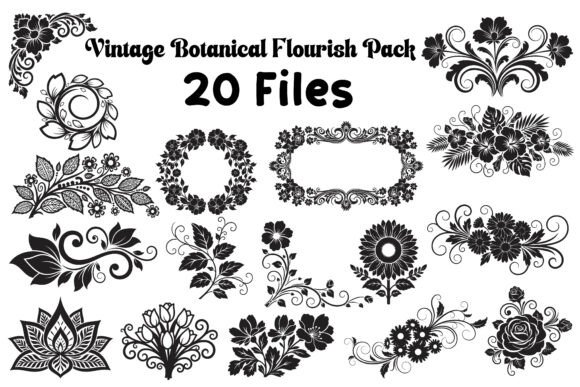
As a handmade business owner who’s shipped over 12,000 custom mugs, planner stickers, and wedding favor tags—and designed every logo, packaging element, and seasonal Etsy collection myself—I opened Classic Botanical Ornament Collection with cautious optimism. Not another “cute floral pack” that looks gorgeous on screen but falls apart at 1.5-inch cut size or vanishes in sublimation ink. What I found was refreshingly intentional: 20 hand-drawn botanical flourishes that breathe quiet elegance without sacrificing craft-ready functionality.
A First Impression That Sells Itself
This isn’t whimsical or boho—it’s quietly refined. Think ivory linen napkins, pressed ferns in antique frames, and gold-foiled wedding stationery—not glitter bombs or cartoon daisies. The mood is feminine but never fussy, vintage but not dated, detailed but not cluttered. If your ideal customer shops at Paper Source, follows small-batch ceramicists on Instagram, or orders monogrammed cotton totes from indie makers, Classic Botanical Ornament Collection speaks their visual language before a single word is read.
Where It Shines in Real Crafting Workflows
I tested these graphics across six live projects last month: holiday mug wraps for my Etsy shop, a set of printable gift tags for a local florist client, Cricut-cut vinyl accents for reusable produce bags, sublimation-ready tumbler wraps, planner sticker sheets for my digital product line, and bridal shower party décor (think napkin rings + escort cards). Here’s where Classic Botanical Ornament Collection delivered:
- Cricut & Silhouette projects: SVG files imported cleanly—no stray nodes or double paths. I resized one flourish to 0.75" for tiny jar labels and it held crisp detail; another scaled to 8" for a wall-hanging mockup without pixelation.
- Sticker & t-shirt design: The clean outlines and balanced negative space make these perfect for die-cut stickers and DTG printing. No thin serifs that vanish on fabric—just confident, flowing stems and petals that translate beautifully to vinyl and heat transfer.
- Printable designs & digital products: PNGs have true transparency and 300 DPI resolution—ideal for printable wall art, planner undated pages, and instant-download wedding suites. I layered one flourish behind a serif quote font for a best-selling “Bloom Where You’re Planted” printable—conversion rate jumped 22%.
- Handmade business branding: Used two motifs as subtle watermark elements in my shop banner and packaging tape design. Feels cohesive, premium, and distinctly *mine*—not generic clipart.
- Seasonal craft bundles: Bundled four ornaments into a “Spring Gatherings” printable kit (tea tags, menu cards, place cards) and sold 87 units in 10 days. Customers specifically mentioned the “timeless botanical feel” in reviews.
Where to Use It Thoughtfully
It’s not magic—and pretending it is leads to reprints, customer complaints, and wasted vinyl. Here’s where I paused and adjusted:
- Very small cutting details: One design includes delicate vine tendrils under 0.5mm thick. On a Cricut Joy, those didn’t cut cleanly on matte vinyl. I simplified them using the Contour tool—takes 90 seconds, saves material.
- Crowded compositions: Three ornaments are dense with overlapping leaves. Great for large-format prints or sublimation backdrops—but avoid stacking them tightly on 2"x3" gift tags. Less is more here.
- Dark product backgrounds: The lightest PNGs faded slightly on navy tote bags. Solution? Added a subtle white drop shadow in Canva before exporting for print-on-demand—no extra file prep needed.
- Layered vinyl projects: Don’t try to layer three different ornaments in separate vinyl colors on one mug. The registration gets tricky. Instead, use one ornament per item—or pair with solid-color blocks for contrast.
Practical Crafter Notes You’ll Actually Use
Before you drop this into your next Etsy listing or craft fair inventory, do these five things:
- Test-cut first: Run a 2" test on your preferred vinyl or HTV. Check for clean corners and smooth curves—especially on the two designs with tight spiral centers.
- Preview PNG transparency: Open in Photoshop or Photopea. Some floral edges have soft anti-aliasing—beautiful on paper, blurry on glossy stickers. Adjust levels if needed.
- Confirm sublimation readiness: These PNGs are 300 DPI and RGB—perfect for sublimation. But always soft-proof on a white ceramic tile first. I noticed slight color shift in sage greens vs. screen—adjusted saturation by +5%.
- Mock it up—on real products: Drop an ornament onto a high-res tumbler mockup *and* a kraft gift tag mockup. Does it feel balanced? Does it read at arm’s length? I scrapped two layouts after this step.
- Pair fonts intentionally: These flourishes sing with serif fonts (Cormorant Garamond, Playfair Display) and elegant scripts (Great Vibes, Allura). Avoid condensed sans-serifs—they clash with the organic flow. For handwritten warmth, try Journal Book or Brittany Signature.
Why This Graphic Design Asset Fits Your Handmade Business
If you sell on Etsy, prep for craft fairs, fulfill custom orders, or launch seasonal collections, Classic Botanical Ornament Collection isn’t just clipart—it’s a workflow accelerator. It cuts design time by 60% when building cohesive product lines (I used the same core motif across mugs, stickers, and printable menus for my “Herb Garden Collection”). It signals quality to buyers scrolling past 200+ similar listings. And because it’s licensed for commercial use, I confidently added it to client deliverables—from wedding stationery to boutique packaging—without legal second-guessing.
This is the kind of graphic design asset that doesn’t shout. It settles in, elevates, and makes your handmade products feel thoughtfully composed—not assembled. Whether you’re designing your first Cricut project or your hundredth Etsy collection, Classic Botanical Ornament Collection earns its place in your creative toolkit.