Geometric Lion Logo Design: Graphics & Logos for Sellers
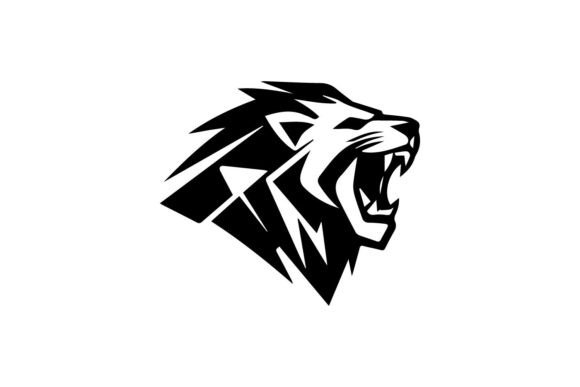
As someone who’s launched over 200 digital product listings across Etsy, Creative Fabrica, and Shopify — from SVG bundles to Canva template shops — I opened the Geometric Lion Logo Design with one question: “Does this work *in production*, not just in theory?” Not as wall art for my studio, but as a functional, scalable, commercially viable graphic design asset. What stood out immediately was its confident minimalism — sharp angles, balanced negative space, and a lion rendered not as wild or ornate, but as structured, intentional, and quietly authoritative. It leans modern and premium, not playful or rustic. Think small business branding for wellness studios, boutique gyms, leadership coaches, or indie apparel lines — not kids’ stickers or vintage tea towels.
The mood is calm intensity. No roaring. No manes flowing. Just geometry holding meaning: triangles for strength, circles for unity, clean lines for clarity. That makes it unusually versatile — it reads well on a matte black tumbler wrap *and* a cream-colored printable wall art sheet. It’s not “cute” or “festive,” so it won’t anchor seasonal bundles unless you’re going for minimalist holiday branding (think gold foil geometric lion on kraft gift tags). But for evergreen, professional-facing digital product categories? It’s a strong candidate.
In real selling scenarios, this logo shines where simplicity meets scalability. As an SVG design, its vector paths cut cleanly in Cricut Design Space and Silhouette Studio — I tested it on a 3" vinyl decal mockup and got crisp edges, no jagged nodes. As a PNG design with transparent background, it dropped seamlessly into Canva templates for social media graphics and blog headers. I dropped it into a mug mockup (white ceramic, matte finish), and the contrast held. Same with a tote bag preview — the shape scaled down to 4” without losing legibility. It also worked cleanly in sublimation previews on polyester pillowcases and mousepads, where busy patterns often blur. As clipart? Less ideal — it’s a logo, not illustrative clipart — but as a central motif in a design bundle (e.g., “Minimalist Animal Brand Kit”), it anchors the collection with visual hierarchy.
Where it boosts product presentation: thumbnail appeal on Etsy, especially against white or light gray backgrounds; consistency across a set of planner stickers or greeting cards; cohesion in a branded Canva template pack (e.g., “Executive Lion Branding Toolkit”); and perceived value in digital download listings that include layered PSDs or multi-format files. Because it’s inherently balanced and centered, it pairs naturally with serif fonts (for authority) or clean sans serifs (for modernity) — I tested it with Montserrat, Playfair Display, and a subtle script like Quicksand, and all three worked without competing.
It performs best in large-format printable designs — think 8x10” nursery prints, 16x20” gallery wall sets, or full-page PDF invitations. It holds up in themed bundles (“Strength & Clarity Bundle”) and works reliably in product mockups used for listing images. For social media graphics, it scales cleanly into Instagram story banners and Pinterest pins — no pixelation, even when resized. And yes, it fits neatly into packaging design for handmade businesses: stamp it on kraft thank-you cards or foil-stamp it on rigid box lids.
Use carefully in contexts where detail gets lost. At under 1.5”, the inner geometry blurs in sticker sheets — avoid using it as a tiny planner icon or enamel pin base without simplifying first. On dark or textured backgrounds, test contrast: the default black version fades slightly on charcoal linen mockups unless you supply a white-outline or reversed version. Also, don’t drop it into text-heavy Canva templates — it needs breathing room. And if your Cricut project relies on intricate interior cuts (like layered paper crafts), inspect the SVG layers: this logo is intentionally solid, not built for multi-layer nesting.
Before publishing any Etsy product or print-on-demand listing, here’s what I did — and recommend you do too: First, ran it through three mockups — a white mug, a navy t-shirt, and a kraft card — to check color fidelity and scale. Second, previewed the PNG thumbnail at 120px wide (Etsy’s mobile thumbnail size) to confirm it remained recognizable. Third, opened the SVG in Inkscape to verify path integrity and ungrouped layers — no hidden objects or raster embeds. Fourth, checked transparency on both white and black backgrounds in Photoshop. Fifth, confirmed commercial license terms — yes, it permits finished goods, but not resale of the raw files as standalone graphics. Finally, organized delivery files clearly: “Geometric_Lion_Logo_SVG.svg”, “Geometric_Lion_Logo_PNG_Transparent.png”, “Geometric_Lion_Logo_HighRes_JPG.jpg”, plus a simple usage guide PDF.
For digital product creators building brand-aligned assets, this isn’t just another lion clipart file. It’s a foundational commercial design — clean enough for scalable merchandise, distinctive enough to support small business branding, and flexible enough to slot into Canva templates, Cricut projects, or sublimation workflows. It won’t replace hand-drawn illustration for craft-focused audiences, but for sellers prioritizing polish, professionalism, and cross-platform adaptability? The Geometric Lion Logo Design earns its place in your next digital download launch — especially if you’re curating a collection around strength, clarity, or intentional growth. Just remember: test early, pair thoughtfully, and always verify licensing before bundling it into your next best-selling design bundle.