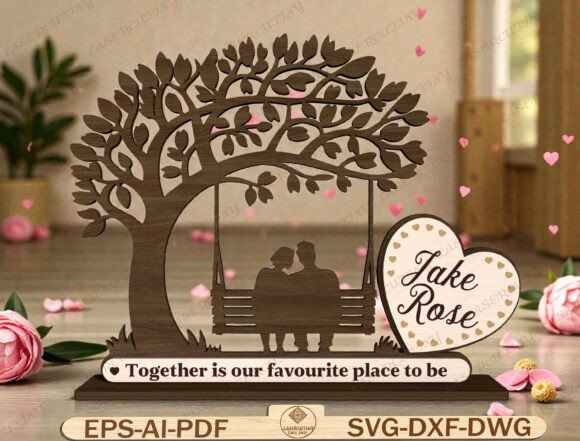
Personalized Couple Swing Tree Laser Cut
A Designer’s First Look: Romantic, Delicate, and Purpose-Built
When I opened the Personalized Couple Swing Tree Laser Cut file, my immediate impression was warmth—not just in theme, but in structure. This isn’t a dense, high-stitch-count machine embroidery design meant for bold statement pieces. It’s light, lyrical, and intentionally minimal: two silhouettes seated on a swing beneath a stylized tree, with clean negative space and gentle curves. As a designer who regularly tests embroidery files for real-world use—especially for boutique apparel, baby gifts, and personalized keepsakes—I appreciate how thoughtfully this balances detail and practicality. It reads as a graphic template first, an embroidery file second—which is actually a strength when you’re building cohesive, brand-aligned handmade products.
Where It Shines: Real Projects That Feel Thoughtful
I recently prepped it for a custom embroidered tote bag order—a gift for a couple’s first anniversary. The design scaled beautifully to 4.2” wide (a comfortable size for most standard hoops), and its open layout meant no heavy fill stitch areas that could stiffen the canvas. On a medium-weight natural cotton tote, the result felt elegant but not fussy—like something you’d proudly carry to a farmers’ market or coffee date. It also translated well onto a soft unisex sweatshirt using a lightweight tear-away stabilizer: the swing’s curved lines stayed smooth, and the tree branches held shape without puckering.
For small business owners and Etsy sellers, this is a quietly versatile asset. It works especially well for nursery decor (think pillow covers or tea towels), holiday embroidery like Valentine’s Day aprons or kitchen towels, and wedding-related items—custom patches for bridesmaid robes, monogrammed baby onesies, or framed hoop art for guest books. Because it’s built as a graphics file (SVG-based, per the description), it’s easy to adjust names or dates before converting to embroidery format—making personalization efficient without sacrificing quality.
Where to Proceed With Care
This isn’t a one-size-fits-all embroidery file—and that’s okay. Its delicate lines and subtle contours demand attention in certain contexts. On stretchy fabric like knits or thin jersey, I recommend testing with a cut-away stabilizer and reducing stitch density slightly to avoid distortion. On dark fabric, fine details like the swing chain or slender tree limbs may blur unless you use high-contrast thread colors (e.g., cream on navy, white on charcoal). And while it’s lovely on flat surfaces, I’d avoid placing it directly over seams or highly curved areas like cap fronts—the swing’s horizontal balance can visually tip if the base isn’t stable.
Small hoop sizes (under 3”) will require careful cropping or simplification—some of the charm lives in the full composition, so shrinking too far risks losing legibility. Likewise, tightly textured fabrics (like heavy terry cloth or bouclé) may swallow finer elements. If you’re planning a batch of embroidered patches, consider reinforcing edges with a satin stitch border to keep the shape crisp after washing.
How It Shapes Perception—And Why That Matters
In handmade product development, perception is part of the material. A design like the Personalized Couple Swing Tree Laser Cut doesn’t shout—it invites. That subtlety builds trust: customers see craftsmanship, not clutter. On an Etsy listing, it elevates perceived value because it feels intentional, not mass-produced. When used consistently across a small shop’s product line—say, matching sweatshirt + pillow cover + tea towel sets—it reinforces brand consistency without needing logos or slogans. And for gift buyers? It reads as heartfelt. Not generic. Not rushed. That emotional resonance directly impacts buyer engagement and repeat orders.
Practical Notes Every Embroidery Designer Should Keep Handy
- Always test on scrap fabric first—especially with your exact stabilizer, thread, and machine tension settings.
- Review stitch density before stitching: look for overlapping fill areas or long satin runs that could cause thread breaks.
- Confirm hoop size compatibility early—this design benefits from at least a 4x4 hoop for optimal clarity.
- Inspect small details in both black-and-white and color mockups; what reads well digitally may need slight cleanup for stitch execution.
- Compare performance on light vs. dark fabric backgrounds—thread color contrast makes or breaks readability.
- Use proper stabilizer weight: lightweight for cottons, medium-cut-away for knits or blends.
- Verify licensing terms before selling finished products or bundling the file—this is a DIGITAL DOWNLOAD, and commercial use rights must be confirmed with the seller.
Final Thought: A Quiet Asset With Real Utility
The Personalized Couple Swing Tree Laser Cut won’t dominate a trade show booth—but it might be the reason a customer chooses your small shop over a bigger competitor. It’s the kind of design that performs best when paired with intention: thoughtful fabric selection, careful hooping, and smart personalization. For craft business owners, it’s a reliable anchor piece—ideal for seasonal collections, gift bundles, or as a signature element in a curated line of romantic, handmade products. It reminds me that sometimes the most effective embroidery file isn’t the flashiest one. It’s the one that stitches cleanly, resonates emotionally, and feels unmistakably human.